Nature is already on your risk register.

If your business depends on stable sites, secure water access, resilient supply chains or public trust, Nature is part of your continuity strategy. The opportunity is to stop treating it as an external issue and start using it as resilience infrastructure.

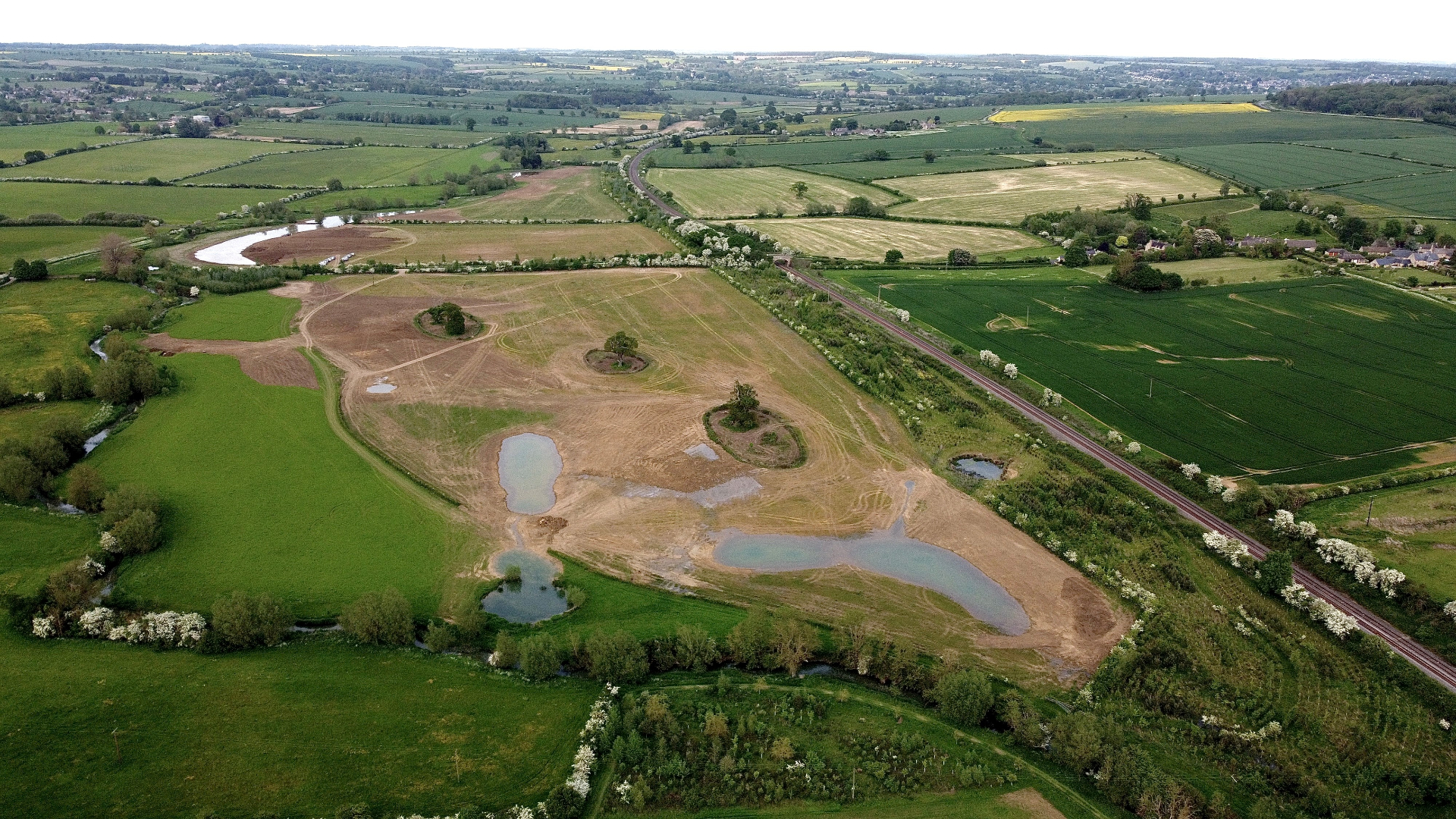
Restored UK wetland with infrastructure in the distance
EVENLODE CATCHMENT

Why companies invest in Nature

Three drivers moving Nature from CSR to core risk budget.

The case for corporate investment in UK Nature has hardened. What was discretionary sponsorship is now physical risk management, mandatory compliance and a defensible reputational position, anchored in contracted, place-based outcomes.

Pillar 01

Risk & resilience

Nature restoration becomes a physical risk-reduction outcome (flood attenuation, water security, supply continuity) moving Nature from the CSR budget straight into the corporate risk budget.

  • Reduces exposure at source, not after the loss
  • Sits on the risk register, not the sustainability page
  • Measured, contracted and audit-ready

Pillar 02

Regulation

Meeting mandatory compliance and reporting frameworks across UK and global regimes that have moved from voluntary signalling to required disclosure and delivery.

  • BNG · 10% Biodiversity Net Gain under the Environment Act 2021
  • WINEP · catchment obligations for water utilities
  • TCFD / TNFD · evolving climate and Nature disclosure

Pillar 03

Reputation

High-integrity, place-based UK restoration projects that offer transparent, auditable environmental value - not opaque off-shore offsets bought to fill a reporting gap.

  • UK-located, named catchments and habitats
  • Independently verified outcomes, not avoided-emission claims
  • Defensible to regulators, investors and the public

The macro exposure

Three risks already on your balance sheet.

Water, supply and compliance. Each one is something Nature-based infrastructure can demonstrably address.

01

Water risk

Abstraction, quality and flood pressure on the sites and supply chains your operations depend on.

ExposureSite continuity
02

Supply chain disruption

Upstream catchments, soils and ecosystems failing under climate and land-use pressure cause delivery shocks.

ExposureMargin volatility
03

Environmental compliance

Tightening regulation around water, nutrients, biodiversity and disclosure raises the cost of inaction.

ExposureLicence to operate

Properties at risk · physical exposure

From 6.3m today to
8m by mid-century.

The UK's flood-exposed property base is expanding. For operators of physical sites, supply chains and insured assets this is no longer a long-dated theme. It is a present line item on the risk register.

Today · recordedPredicted · projection

UK properties at flood risk · millions

Source · Environment Agency · NaFRA 2024

UK Nature finance gap

£0bn

Additional Nature-related investment needed across the UK this decade.

Green Finance Institute · UK Finance Gap, 2021

Properties at flood risk

0.0m

Already touching homes, infrastructure and operations across England.

Environment Agency · NaFRA, 2024

GDP nature-dependent

0%

Of global GDP relies on services from ecosystems we are degrading.

World Economic Forum · Nature Risk Rising, 2020

Status quo vs. resilience infrastructure

Two ways to absorb the same risk.

Dimension
Status quo
With Nature infrastructure
Capex profile
Hard infrastructure, single-use, depreciating over time.
Living infrastructure, compounding ecological function over 125+ years.
Risk treatment
Insure and absorb residual physical risk.
Reduce exposure at source with measured, contracted outcomes.
Counterparty story
Cost centre on the sustainability page.
Contracted resilience asset on the risk register.
Co-benefit value
None priced in.
Biodiversity, carbon and community resilience tracked alongside the primary outcome.

Sectors

Where the exposure already shows up.

  • Water utilities

    Catchment-based interventions that cut treatment cost, sediment and nutrient load against AMP-cycle obligations.

  • Food & beverage

    Watershed security for production sites and agricultural supply, exposed to abstraction and quality risk.

  • Insurance & re-insurance

    Flood and surge exposure where coastal and floodplain restoration changes the underwriting picture.

  • Real estate & infrastructure

    Site-level surface-water and flood resilience for high-value assets in catchments under pressure.

  • Energy & industrials

    Cooling water security, abstraction continuity and discharge headroom in changing flow regimes.

What we offer

A flagship contract, and the credits that stack alongside it.

Two distinct instruments, one underlying portfolio of UK restoration. Buy one, or stack both against the same place-based project to maximise environmental and commercial value.

Flagship instrument

Resilience Purchase Agreement (RPA)

An RPA is a long-term service contract — not a donation, sponsorship or offset. Corporates pay an inflation-linked fee over a multi-year term in return for a defined, measurable reduction in physical risk, with performance obligations on both sides.

Structure
Long-term, inflation-linked service contract
What you buy
Contracted physical risk reduction
Performance
Bilateral obligations, audit-ready monitoring

Applied to

  • Flood attenuation for an operational site or asset cluster.
  • Water quality and yield improvement in a supply catchment.
  • Biodiversity outcomes satisfying supply-chain obligations.
Carbon credits

Verified UK sequestration.

Generated from peatland restoration, woodland creation and coastal habitat recovery, verified against UK-recognised standards. Genuine, permanent removals — not avoided-deforestation accounting.

Spot or forward purchase · standalone or stacked with an RPA.

BNG units

Mandatory compliance, supplied.

Biodiversity Net Gain units generated from habitat creation across the portfolio, satisfying the mandatory 10% BNG requirement under the Environment Act 2021.

Spot or forward purchase · standalone or stacked with an RPA.

Stacking

Where RPAs contract for risk-reduction services, credits contract for certified environmental outcomes. Purchased standalone for compliance, or stacked alongside an RPA to maximise the value of a single place-based project.

Product logic

Four routes, one underlying portfolio.

A side-by-side view of what each instrument contracts for, how it is structured and which credit type, if any, sits behind it.

Route

Resilience Purchase AgreementFlagship

Buying

Risk reduction service

Structure

Long-term, inflation-linked service contract

Credit type

None required

Route

Carbon credits

Buying

Verified carbon sequestration

Structure

Spot or forward purchase

Credit type

Verified carbon units

Route

BNG units

Buying

Biodiversity Net Gain compliance

Structure

Spot or forward purchase

Credit type

BNG habitat units

Route

Combined (RPA + Credits)

Buying

Risk reduction + compliance

Structure

Blended structure

Credit type

Carbon and / or BNG

Why this. Why now.

The gap between voluntary and mandatory has closed.

Nature is finite. High-integrity UK projects take years to develop. Corporates and institutions moving now secure access and stable pricing before demand outstrips supply.

Our position

Rebalance Earth invests in that supply now, on behalf of the corporates and institutions that need it.

  • Regulation

    Voluntary has become mandatory.

    BNG is now a mandatory condition of planning consent in England. OFWAT's WINEP is driving catchment-based, utility co-funded restoration at scale. TCFD is in force and TNFD is moving rapidly from voluntary uptake to required disclosure.

  • Supply

    Nature is finite — and slow to build.

    High-integrity UK restoration projects take years to design, permit and bring on-stream. The pipeline cannot be conjured to meet a spike in corporate demand. Supply is set today by who is investing today.

  • Timing

    Price and access tighten as demand rises.

    Corporates that move now secure access to verified outcomes and stable pricing before competing demand from compliance, insurance and disclosure regimes outstrips available supply.

How we engage

From a continuity problem to a contracted outcome.

A three-step engagement, tuned to a corporate continuity question. Each step ends in a deliverable your risk and operations teams can use.

  1. Map the exposure

    Where the risk lives

    Site-by-site
    We work with your risk and operations teams to identify where physical and water risk concentrates across sites and supply.
    Catchment view
    Hydrological and geospatial analysis traces the exposure to the upstream Nature systems that drive it.

    Catchment scan

    GPAP

  2. Design the outcome

    The intervention, engineered

    Resilience target
    We design Nature-based interventions that target the specific resilience outcome relevant to your continuity strategy.
    Proof layer
    Monitoring and assurance are built in so the outcome is measurable and audit-ready from day one.

    Outcome layer

    Measured

  3. Contract and pay over time

    Aligned to your horizon

    Payment structure
    We structure an outcome-based payment that fits your planning horizon and unlocks the asset on the ground.
    Operating continuity
    You convert balance-sheet exposure into a contracted operating cost backed by a real, place-based asset.

    Engagement term

    Multi-year

Get in touch

Investing in a world worth living in.

For investors, companies and partners ready to treat Nature as critical infrastructure.